
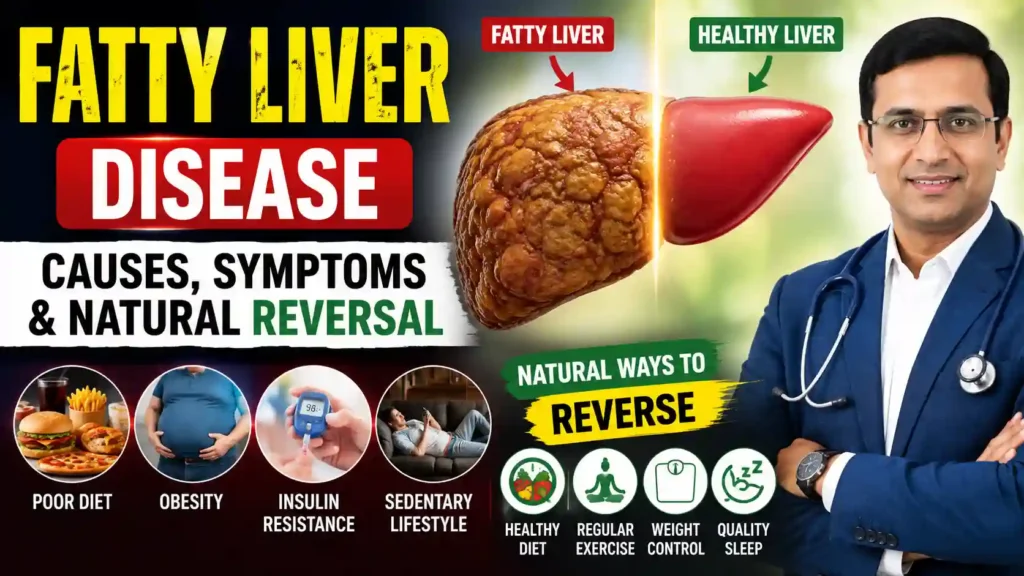
Non-alcoholic fatty liver disease, commonly known as fatty liver, occurs when excess fat accumulates in
liver cells, often as a result of poor diet, obesity, and insulin resistance, rather than alcohol consumption.
It has become increasingly common, affecting a significant portion of the adult population, many of
whom are unaware they have the condition until it is detected through routine blood tests or imaging.
In its early stages, fatty liver typically causes no noticeable symptoms, which is why it often goes
undiagnosed for years. As the condition progresses, some individuals may experience fatigue, mild
discomfort in the upper right abdomen, or unexplained weakness. If left unaddressed, fatty liver can
progress to inflammation, scarring, and in severe cases, cirrhosis or liver failure.
Read Also : Early Warning Signs of Type 2 Diabetes You Shouldn’t Ignore
The primary drivers of fatty liver disease include excess calorie intake, particularly from refined sugars
and processed foods, insulin resistance, obesity, and a sedentary lifestyle. Because these same factors
overlap significantly with those driving Type 2 diabetes, fatty liver and diabetes frequently occur together
and can be addressed through similar lifestyle interventions.
Reducing intake of added sugars, refined carbohydrates, and unhealthy fats, while increasing fiber-rich
vegetables, whole grains, and lean protein sources, helps reduce fat accumulation in the liver over time.
Regular physical activity, particularly a combination of aerobic exercise and strength training, has been
shown to directly reduce liver fat, even before significant weight loss occurs.
Weight loss of even seven to ten percent of body weight has been associated with meaningful
improvement or complete resolution of fatty liver in many patients. Limiting alcohol consumption, even if
not the primary cause, further supports liver health and recovery.
At Dr. Rajender Lifestyle Clinic, fatty liver is addressed as part of an integrated metabolic health
program, since improving insulin sensitivity and reducing visceral fat benefits liver health alongside blood
sugar and weight management goals