
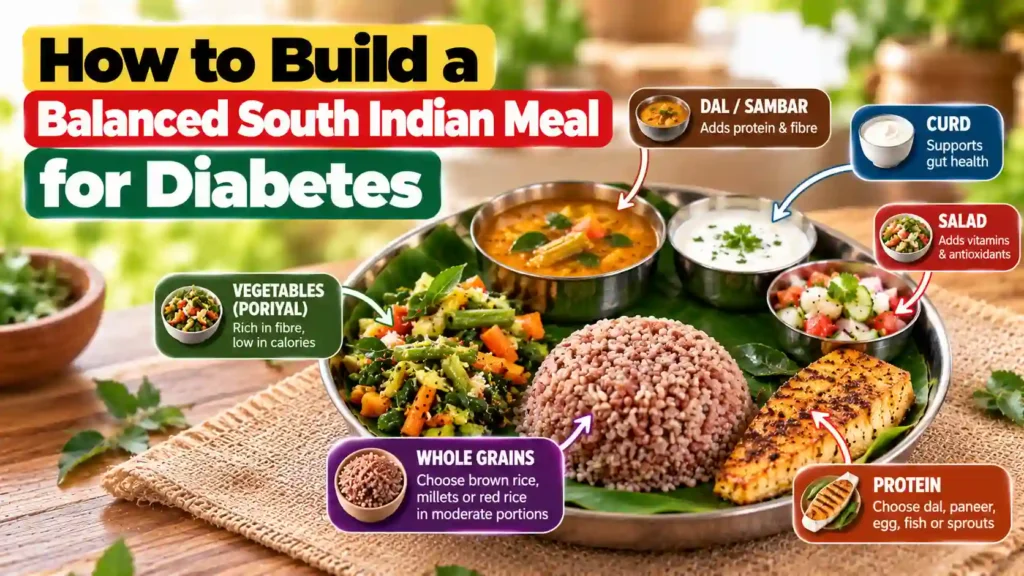
How to Build a Balanced South Indian Meal for Diabetes: South Indian food includes a wide variety of familiar dishes, such as idli, dosa, rice, sambar, rasam, curd rice, pongal, ragi mudde, jowar roti, and vegetable curries. People with diabetes do not necessarily need to stop eating these foods.
Instead, the key is to understand how ingredients, portion sizes, cooking methods, and meal combinations affect the overall diet.
A balanced South Indian meal for diabetes includes appropriate portions of carbohydrate-rich foods, plenty of suitable vegetables, and adequate protein based on individual needs. There is no single meal plan that works for everyone, so personal preferences, medications, activity levels, and other medical conditions should also be considered.
1. Understand the Role of Carbohydrates
Rice, idli, dosa, upma, pongal, ragi mudde, and roti all provide carbohydrates. These foods can raise blood glucose because the body breaks down their starch into glucose during digestion.
This does not mean that people with diabetes must eliminate them.
Instead, pay attention to:
- The amount of rice or other grains served.
- The number and size of idlis or dosas.
- The amount of potato or other starchy ingredients.
- Whether several carbohydrate-rich foods are combined in one meal.
- How the meal fits into your overall daily carbohydrate needs.
For example, eating rice along with a large serving of another starch-rich food can increase the total carbohydrate content of the meal.
2. Fill More of Your Plate With Vegetables
Vegetables provide fibre, vitamins, minerals, and variety. Non-starchy vegetables can help make a meal more balanced without adding as many carbohydrates as large portions of rice or other starches.
Suitable options may include:
- Beans.
- Cabbage.
- Cauliflower.
- Cucumber.
- Gourds.
- Brinjal.
- Leafy vegetables.
- Okra.
- Other locally available vegetables.
Vegetables can be included in sambar, curries, poriyal, stir-fries, and salads.
Try to prepare vegetable dishes with moderate amounts of oil. Potatoes and other starchy vegetables contribute more carbohydrates, so their portions should be considered separately.
3. Include Suitable Protein Sources
Protein contributes to tissue maintenance and helps make meals satisfying. South Indian meals can include a range of protein-containing foods.
Examples include:
- Dal and lentils.
- Beans and chickpeas.
- Plain curd.
- Paneer.
- Eggs.
- Fish or other suitable animal protein sources, if part of your diet.
- Tofu and other plant-based options.
Protein requirements differ between individuals. People with chronic kidney disease or other medical conditions may need specific advice about the quantity and type of protein they should eat.
4. Make Common South Indian Breakfasts More Balanced
You can often adjust familiar breakfast foods rather than eliminating them.
Idli and Sambar
Idli provides carbohydrates, while sambar contributes lentils and vegetables. Choose a portion that fits your meal plan and consider adding a suitable protein source if needed.
Dosa
Dosa contains carbohydrates from its grain ingredients. The portion, batter recipe, oil, and side dishes influence the overall meal. Vegetable-rich sambar or suitable protein-containing accompaniments can help improve balance.
Upma
Upma made from semolina can be carbohydrate-rich. Adding vegetables can improve its nutritional composition, while an appropriate protein source may make the meal more balanced.
Pongal
Pongal combines rice and moong dal. Consider the rice portion, the quantity of dal, the amount of ghee, and whether the dish contains added sugar.
Ragi or Jowar Dishes
Millets can provide fibre and other nutrients, but they still contain carbohydrates. Portion control remains important even when using whole grains.
5. Practise Rice Portion Control
Rice is a staple in many South Indian households. People with diabetes do not necessarily have to eliminate it, but they may need to adjust the amount they eat.
Helpful strategies include:
- Use a consistent serving utensil to make portions easier to compare.
- Serve vegetables and suitable protein alongside rice.
- Avoid automatically refilling the plate.
- Consider whether the meal also contains dosa, roti, potatoes, or other carbohydrate sources.
- Follow individual advice from your clinician or dietitian.
Brown rice generally contains more fibre than polished white rice, but it still contributes carbohydrates. Switching rice varieties does not mean portions no longer matter.
6. Be Careful With Hidden Salt, Sugar, and Oil
Traditional foods can be nutritious, but ingredients used during cooking also affect the meal.
Salt
Pickles, papad, salty chutneys, and some packaged foods can contribute substantial sodium. This matters for people managing high blood pressure or certain kidney and heart conditions.
Sugar and Jaggery
Jaggery, honey, and other sweeteners still contribute sugars or carbohydrates. They should not be assumed to be safe substitutes for sugar in diabetes.
Oil and Ghee
Oil and ghee add energy to a meal. Use amounts that suit your calorie needs and cardiovascular health goals.
7. Use a Simple Plate-Balancing Method
A visual plate method can be a useful starting point for many people. It is not a rigid rule, and individual needs may differ.
About half the plate: non-starchy vegetables
Include a variety of cooked or raw vegetables suitable for your health needs.
About one-quarter: protein-rich foods
Choose dal, beans, eggs, paneer, tofu, fish, or other suitable options. Account for the carbohydrates in legumes.
About one-quarter: carbohydrate-rich foods
Choose an appropriate portion of rice, roti, millet, or another grain. Your individual requirements may call for a different balance.
This method is a general guide rather than a prescription. It may need adjustment for your medication, appetite, activity, nutritional requirements, and other health conditions.
8. Consider Meal Timing and Consistency
Meal timing can matter, especially for people taking insulin or medicines that may cause low blood sugar. Follow the meal timing and medication instructions provided by your healthcare professional.
Avoid making sudden, major changes to carbohydrate intake without discussing them with your clinician if your medication regimen depends on regular meals.
9. Monitor Your Individual Response
Different people can respond differently to the same meal. If you have been advised to monitor your blood glucose, follow your healthcare professional’s instructions about when to test and how to interpret your results.
Keeping a food and glucose record may help identify patterns. A clinician or dietitian can use that information to help adjust portions and meal combinations.
Do not change prescribed medication solely based on one reading or one meal.
Example of a Balanced South Indian Day
This is an illustrative example, not a personalised diet prescription.
| Meal | Example |
|---|---|
| Breakfast | Idli with vegetable-rich sambar and a suitable protein source if needed |
| Mid-morning | A suitable portion of whole fruit, if appropriate for your meal plan |
| Lunch | A measured serving of rice, vegetable curry, dal or another protein source, and plain curd if suitable |
| Evening snack | Plain roasted chana or a small portion of nuts, depending on individual needs |
| Dinner | Jowar roti or another suitable grain with vegetables and a protein source |
Portions should be adjusted according to individual nutritional needs, glucose targets, activity, medication, and medical advice.
Frequently Asked Questions
1. Can people with diabetes eat rice every day?
Many people with diabetes can include rice in their meal plan. The portion, type of rice, accompanying foods, and individual glucose response matter.
2. Which South Indian breakfast is best for diabetes?
There is no single best breakfast for everyone. Idli with sambar, a suitably portioned dosa with balanced accompaniments, or vegetable-rich preparations may fit into different meal plans.
3. Are millets always better than rice for diabetes?
No. Millets can provide fibre and other nutrients, but they still contain carbohydrates. Portion size and overall meal composition remain important.
4. Can people with diabetes eat curd rice?
It may fit into some meal plans in a suitable portion. Consider the rice quantity, choose plain unsweetened curd, and include vegetables or other foods as appropriate.
5. Should people with diabetes stop eating dosa and idli?
Not necessarily. These foods can fit into many diets when portions and accompanying foods are considered carefully.
6. Is jaggery better than sugar for diabetes?
Jaggery still contributes sugars and carbohydrates. It should not be considered a diabetes-safe substitute for sugar.
7. Do people with diabetes need to follow the same diet plan?
No. Nutritional needs vary depending on medication, glucose targets, activity, weight goals, personal preferences, kidney function, and other health conditions. Personalised guidance can help make a meal plan practical and safe.
Conclusion
Building a balanced South Indian meal for diabetes does not require giving up every traditional food. Rice, idli, dosa, pongal, ragi mudde, and jowar roti can fit into some meal plans when portions and ingredients are considered carefully.
Prioritise vegetables, include suitable protein sources, moderate added salt, sugar, and oil, and pay attention to the overall carbohydrate content. Most importantly, follow a meal plan that reflects your individual health needs rather than relying on a universal list of foods to avoid.
Looking for a practical South Indian diet plan for diabetes? Dr. Rajender’s Lifestyle Clinic, Banjara Hills, Hyderabad, provides evidence-based medical guidance, personalised nutrition support, and lifestyle counselling to help people manage blood sugar and improve long-term metabolic health.
Read Also:
