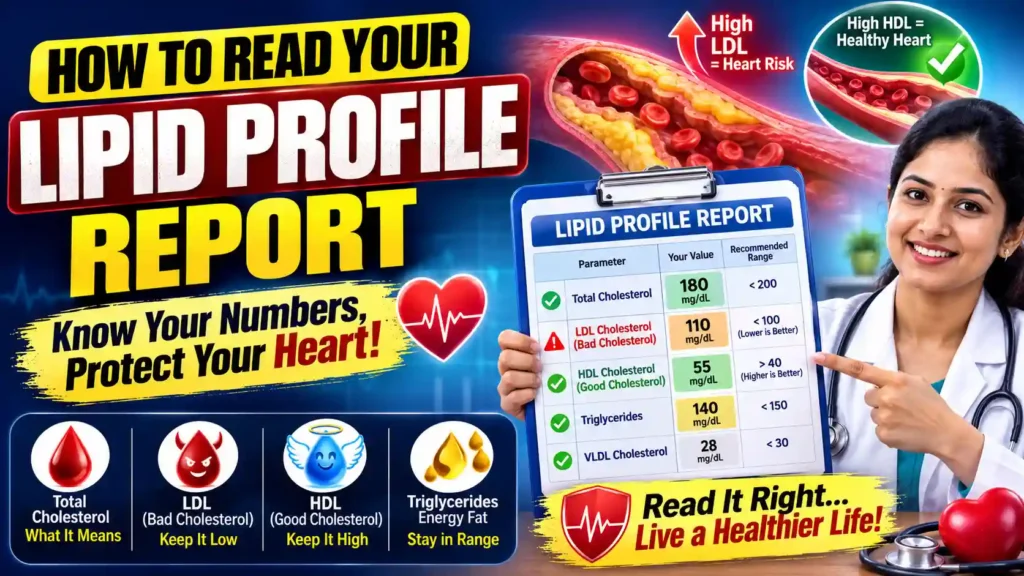
A lipid profile is a routine blood test that measures different types of fats in the bloodstream, providing
important insight into cardiovascular health risk. Understanding what each value means can help
patients better engage with their own health management, rather than relying solely on a doctor’s brief
explanation.
Read Also : Understanding HbA1c: What Your Numbers Really Mean
Total cholesterol represents the combined measurement of all cholesterol types in the blood, generally
recommended to be below 200 milligrams per deciliter for most adults. However, this single number is
less important than understanding the breakdown between different cholesterol types, since not all
cholesterol carries the same health risk.
Low-density lipoprotein, commonly known as LDL or bad cholesterol, tends to deposit along artery walls,
contributing to plaque buildup and increasing the risk of heart disease and stroke over time. Lower LDL
levels are generally better, with specific targets depending on individual risk factors such as existing
diabetes or heart disease.
High-density lipoprotein, or HDL, known as good cholesterol, helps remove excess cholesterol from the
bloodstream and transport it back to the liver for processing. Higher HDL levels are generally protective,
and levels above 60 milligrams per deciliter are considered particularly favorable for cardiovascular
health.
Triglycerides represent another type of fat in the blood, often elevated due to excess sugar and refined
carbohydrate consumption, as well as insulin resistance. Elevated triglycerides, combined with low HDL,
are frequently seen together in individuals with metabolic syndrome and significantly increase
cardiovascular risk.
The ratio between total cholesterol and HDL, as well as LDL and HDL, often provides additional insight
beyond individual numbers alone. Lifestyle factors, including diet quality, physical activity, weight
management, and reducing refined sugar intake, can meaningfully improve most lipid profile markers
over time.
At Dr. Rajender Lifestyle Clinic, lipid profile results are reviewed in detail with patients, helping them
understand their specific cardiovascular risk and how their personalized nutrition and lifestyle plan is
designed to improve these markers.