
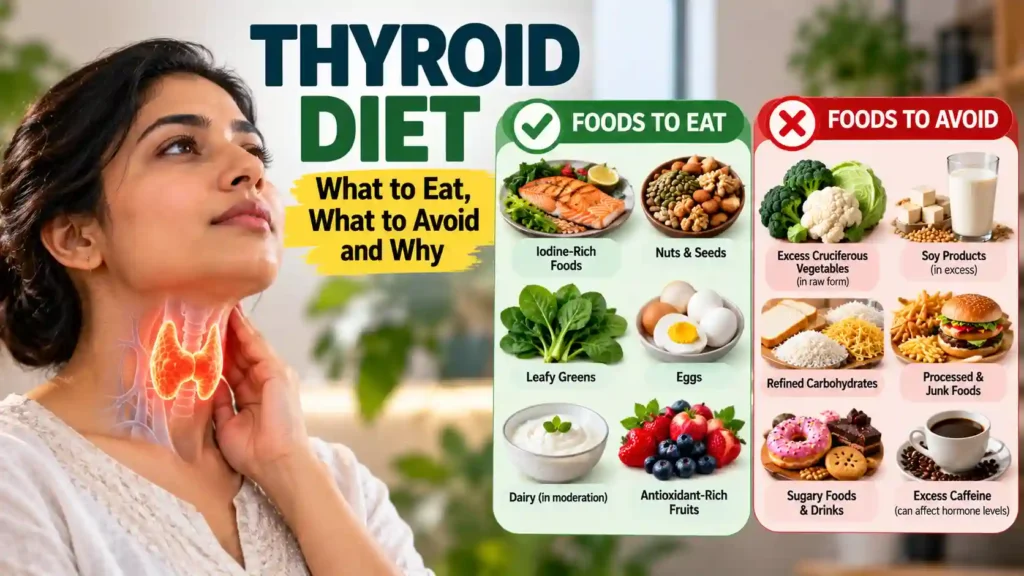
Thyroid Diet: What to Eat, What to Avoid and Why
Search for a thyroid diet and you will find long lists of foods to avoid, miracle foods, and expensive
supplements. The truth is simpler. No diet cures thyroid disease, and most people do not need to
eliminate many foods. A balanced diet supports your overall health, helps weight and energy, and
ensures that your thyroid medicine works properly. This guide separates facts from myths.
The Role of Diet in Thyroid Disease
Thyroid disease is treated with medicines, but diet matters in three ways. First, the thyroid needs certain
nutrients to work. Second, some foods and supplements affect how thyroid tablets are absorbed. Third,
a balanced diet helps manage weight, cholesterol, and blood sugar, which are often affected by thyroid
problems.
Key Nutrients for the Thyroid
- Iodine: Needed to make thyroid hormone. Iodised salt in normal amounts is enough for most people.
Both too little and too much can cause problems. - Selenium: Found in eggs, fish, sunflower seeds, and whole grains. A balanced diet usually provides
enough. - Zinc and iron: Found in pulses, nuts, seeds, meat, and leafy greens. Deficiencies are common and
can affect thyroid function and hair. - Vitamin D and B12: Often low in people with autoimmune thyroid disease. Testing helps decide
supplements. - Protein: Supports muscle and metabolism, and helps with weight control.
Do You Really Need to Avoid Cabbage, Cauliflower and Soy?
Cabbage, cauliflower, broccoli, and soy contain goitrogens, substances that can interfere with the
thyroid in very large amounts, especially when iodine intake is low. In normal portions, and when
cooked, they are safe for most people and provide valuable nutrients. You do not need to avoid them.
Soy products can reduce tablet absorption if eaten at the same time, so keep them away from your
thyroid pill.
Millets and the Thyroid
Some millets, such as pearl millet, contain goitrogenic compounds. This has been a concern mainly
when iodine intake is inadequate or when millets form most of the diet. Eating a variety of grains, using
iodised salt, and cooking or soaking millets reduces the concern. You do not need to avoid millets if your
thyroid is treated and monitored.
How Food Affects Thyroid Tablets
- Take levothyroxine with water on an empty stomach, usually thirty to sixty minutes before breakfast.
- Wait at least thirty to sixty minutes before coffee or tea, which can reduce absorption.
- Keep calcium, iron, and antacids at least four hours apart from your tablet.
- Avoid taking tablets with soy products, walnuts, or high-fibre foods.
- Be consistent with timing, and do not change your routine without advice.
Supplements: Be Careful
Kelp, seaweed, and many thyroid support products contain high doses of iodine, which can worsen both
underactive and overactive thyroid. Some also contain thyroid hormone, which is dangerous without
monitoring. Biotin supplements can interfere with thyroid blood tests. Use supplements only when
advised.
Foods That Help Overall Health
- Vegetables and fruit of many colours.
- Pulses, sprouts, eggs, fish, curd, and paneer.
- Whole grains and millets in moderate portions.
- Nuts and seeds in small handfuls.
- Water, buttermilk, and unsweetened drinks.
Foods to Limit
Sugary drinks, sweets, fried foods, and processed snacks promote weight gain and insulin resistance,
which are common when the thyroid is underactive. Excess alcohol also affects metabolism.
Gluten and Thyroid
A gluten-free diet is not needed for thyroid disease. However, autoimmune thyroid disease is sometimes
accompanied by celiac disease, so ask your doctor about testing if you have digestive symptoms,
anaemia, or poor absorption of thyroid medicine.
Thyroid and Weight
Treating an underactive thyroid can correct part of the weight gain, but diet and activity are still needed.
Aim for gradual weight loss, strength training, adequate protein, and regular meals.
Care at Dr. Rajender’s Lifestyle Clinic
The clinic offers structured, evidence-based care for thyroid disorders alongside Type 2 diabetes,
hypertension, PCOS, obesity, and metabolic conditions, with personalised nutrition, physical activity,
lifestyle correction, and continuous medical guidance.
Book a Consultation
Visit https://www.drrajenderslifestyleclinic.com/ to learn more and book a consultation.
Frequently Asked Questions
Should I avoid cabbage and cauliflower with hypothyroidism?
Not usually. In normal cooked portions they are safe and nutritious. Keep a balanced diet and take your
tablet properly.
Is iodised salt enough for the thyroid?
For most people, yes, in normal amounts. Avoid iodine or kelp supplements unless prescribed.
Can I drink coffee with thyroid medicine?
Wait at least thirty to sixty minutes after your tablet before coffee, as it can reduce absorption.
Do I need a gluten-free diet for thyroid disease?
No, unless you also have celiac disease. Ask your doctor if you have digestive symptoms.
Read Also:

One Response