
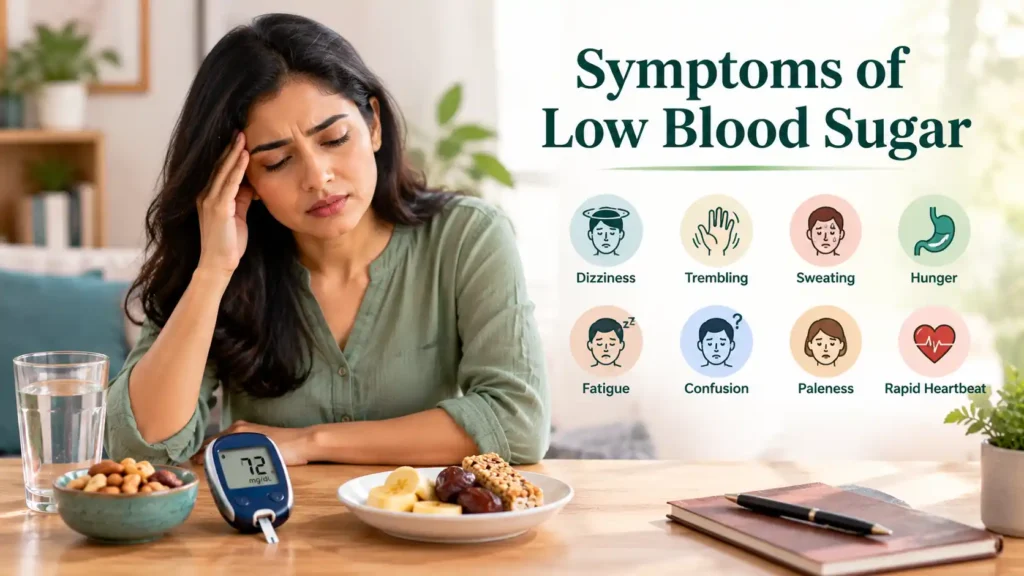
Symptoms of Low Blood Sugar: Some people with diabetes feel weak, tired or sweaty after breakfast. These symptoms may sometimes occur because blood sugar has dropped too low.
Hypoglycemia means blood glucose below 70 mg/dL. It is important to recognize this condition because low blood sugar can occur in people taking certain diabetes medicines, particularly when meals are delayed or medication requirements change.
Weakness or dizziness alone cannot confirm hypoglycemia. Checking blood glucose when symptoms occur can help identify the cause.
What Are the Symptoms of Hypoglycemia?
Common symptoms of low blood sugar include:
- Sweating
- Weakness and fatigue
- Dizziness
- Blurred vision
- Feeling unusually tired
- Difficulty carrying out normal activities
Some people may also experience symptoms during sleep, making nighttime hypoglycemia difficult to recognize.
What Causes Low Blood Sugar in Diabetic Patients?
1. Delaying or Missing Meals
Going for a long time without eating can increase the risk of low blood sugar in people taking insulin or certain diabetes medicines.
Maintaining regular meal timings can help reduce the risk of a mismatch between food intake and medication.
2. Diabetes Medication Requirements Changing
As blood sugar control improves, the amount of medication a person needs may change.
If the current treatment causes repeated low blood sugar, the healthcare professional should review the medication and meal plan.
Do not reduce, stop or change diabetes medication on your own. A doctor can determine whether an adjustment is necessary.
3. Exercise
Physical activity can lower blood glucose. People using insulin or medicines that can cause hypoglycemia may be at greater risk of low blood sugar during or after exercise.
Checking blood glucose before exercise may be helpful when advised as part of an individual’s diabetes management plan.
4. Alcohol Consumption
Alcohol can contribute to low blood sugar, particularly in people taking insulin or certain glucose-lowering medicines. The risk can increase when alcohol is consumed without adequate food.
What Is Nighttime Hypoglycemia?
Nighttime hypoglycemia, also called nocturnal hypoglycemia, occurs when blood sugar drops during sleep.
Possible warning signs include:
- Waking suddenly during the night
- Nightmares
- Sweating during sleep
- Difficulty falling asleep again after waking
Potential contributing factors include missing dinner, taking insulin that acts during the night, drinking alcohol or doing prolonged exercise in the evening.
If these symptoms occur repeatedly, discuss them with your healthcare professional and check glucose levels as advised.
How Can You Prevent Nighttime Low Blood Sugar?
Prevention depends on the underlying cause, medication and meal pattern.
Some people may need a bedtime snack, such as buttermilk, fruit or another suitable snack, when recommended according to their glucose pattern and treatment plan.
However, a bedtime snack is not necessary for every person with diabetes. The appropriate choice and amount should be individualized.
People who frequently experience low glucose at night may need a review of their medication and meal timing.
Follow a Regular Meal Schedule
Regular meal timings can help people taking insulin or certain diabetes medicines avoid long gaps without food.
An example schedule mentioned in the supplied guidance is:
- 8 AM: Breakfast
- 10 AM: A snack, such as a suitable ragi-based preparation
- 1 PM: Lunch
- 4 PM: An evening snack, such as sprouts or fruit
- 8 PM: Dinner
- Before bedtime: A suitable snack only when needed as part of the individual’s treatment plan
This is an example rather than a fixed schedule for everyone. Meal timings and snack requirements should be adjusted according to medication, activity and blood glucose readings.
Why Is Regular Blood Sugar Monitoring Important?
A glucometer can help determine whether weakness, sweating or dizziness is associated with low blood glucose.
Checking glucose when symptoms occur, along with testing at the times recommended by your healthcare professional, can help identify patterns.
Keep a record of readings, meals, exercise and symptoms so that your doctor can review whether medication or meal timing needs to change.
Severe hypoglycemia can cause confusion, seizures or loss of consciousness and requires immediate medical assistance.
Final Takeaway
Low blood sugar can occur in people with diabetes because of delayed meals, medication-related factors, exercise or alcohol consumption.
Recognizing symptoms such as sweating, weakness, dizziness and blurred vision is important. Regular glucose monitoring, consistent meal timing and an individualized medication plan can help reduce the risk.
If low blood sugar happens repeatedly, especially during the night or after meals, consult your diabetes care team rather than changing medication on your own.
Frequently Asked Questions
What blood sugar level is considered low?
A blood glucose level below 70 mg/dL is considered low.
Why do I feel weak after breakfast if I have diabetes?
Weakness after breakfast may be associated with low blood sugar, but other causes are possible. Check your glucose when symptoms occur and discuss repeated episodes with your healthcare professional.
What are the symptoms of low blood sugar?
Common symptoms include sweating, weakness, fatigue, dizziness and blurred vision.
What is nighttime hypoglycemia?
Nighttime hypoglycemia occurs when blood sugar drops during sleep. Warning signs may include sweating, nightmares and waking suddenly.
Can skipping dinner cause low blood sugar at night?
Missing dinner may increase the risk of hypoglycemia in people taking insulin or certain diabetes medicines.
Should diabetic patients eat a bedtime snack?
Some people may need one depending on their glucose pattern and treatment, but it is not necessary for everyone.
Can exercise cause low blood sugar?
Yes. Exercise can lower blood glucose, particularly in people taking insulin or certain diabetes medicines.
Should I reduce my diabetes medication if my sugar drops?
Repeated low blood sugar should be discussed with your doctor. Do not change or stop prescribed medication independently.
Diabetes Care at Dr. Rajender’s Lifestyle Clinic
At Dr. Rajender’s Lifestyle Clinic, Banjara Hills, Hyderabad, diabetes care focuses on personalized nutrition, physical activity, lifestyle correction and appropriate medical guidance. Dr. Rajender Ramagiri, Founder & Lead Physician, helps patients work toward better metabolic health through a structured, evidence-based approach.
For personalized guidance on hypoglycemia, meal timing, glucose monitoring and diabetes medication, consult your diabetes care team.
Read Also:

One Response