
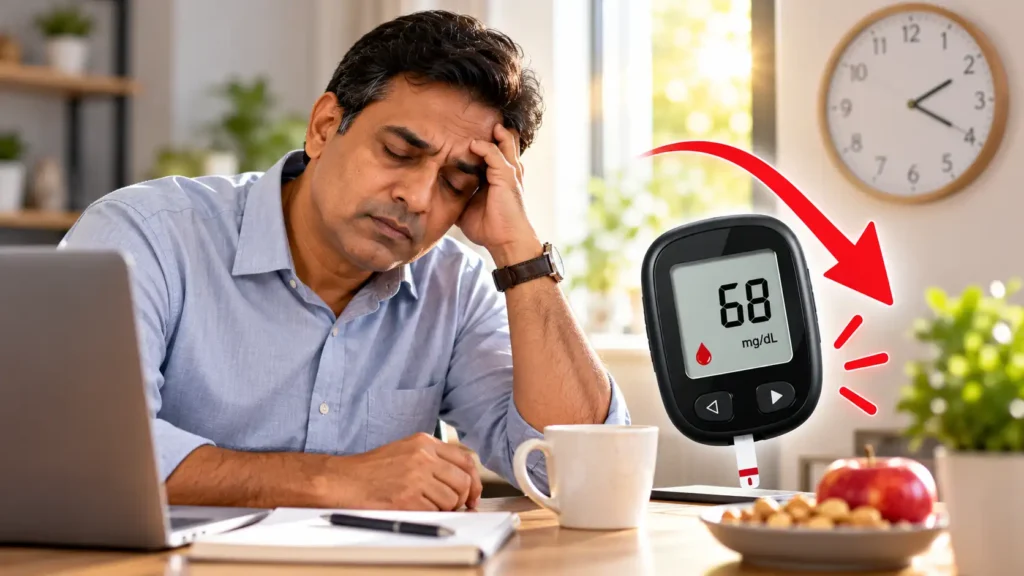
Why Does Blood Sugar Drop Suddenly in the Afternoon?:
Have you ever felt shaky, sweaty, weak, dizzy, or unusually hungry during the afternoon? These symptoms may sometimes occur when blood sugar levels fall below the normal range. For people living with diabetes, a sudden afternoon blood sugar drop can be concerning, especially when it happens repeatedly.
Blood sugar levels naturally change throughout the day depending on meals, physical activity, medication, stress, and other factors. However, a significant drop in glucose should not be ignored, as it may affect concentration, energy, and overall well-being.
Understanding the possible causes of an afternoon blood sugar drop can help you identify patterns and take appropriate steps to manage your glucose levels safely.
At Dr. Rajender’s Lifestyle Clinic, diabetes management focuses on understanding individual glucose patterns, nutrition, physical activity, medication requirements, and lifestyle habits.
What Is a Sudden Drop in Blood Sugar?
A sudden drop in blood sugar occurs when the amount of glucose in the bloodstream decreases quickly or falls below the level your body needs.
Blood glucose below 70 mg/dL is generally considered low and requires attention, particularly for people taking insulin or certain diabetes medications. A reading below 54 mg/dL is considered clinically significant hypoglycemia and requires prompt treatment.
Common symptoms include:
- Shaking or trembling
- Sweating without an obvious reason
- Sudden hunger
- Dizziness or light-headedness
- Headache
- Fast heartbeat
- Weakness or tiredness
- Difficulty concentrating
- Irritability or confusion
Not everyone experiences the same symptoms. Some people, especially those who have frequent episodes of hypoglycemia, may not notice the usual warning signs. If you experience these symptoms, check your blood glucose if possible rather than assuming that low blood sugar is the cause.
7 Reasons Why Blood Sugar Drops Suddenly in the Afternoon
1. Skipping Lunch or Delaying Meals
One possible reason for an afternoon blood sugar drop is not eating enough food or going too long without a meal.
When you skip lunch, delay your meal, or eat much less than usual, the amount of glucose available from food may not match your body’s energy needs. This is especially important if you use insulin or diabetes medications that can lower blood glucose.
For example, someone who takes their usual diabetes medication but delays lunch may experience shakiness, sweating, or weakness during the afternoon.
What can help?
- Eat meals at reasonably consistent times.
- Avoid skipping meals when using medication that can cause hypoglycemia.
- Carry a suitable source of fast-acting glucose if you are at risk of low blood sugar.
- Discuss recurring episodes with your healthcare professional.
2. Taking Diabetes Medication Without Enough Food
Certain diabetes medications can cause blood sugar to fall too low, especially when meals are delayed or smaller than expected.
Insulin and some medicines, including sulfonylureas such as glimepiride, can cause hypoglycemia. The risk depends on the medication, dose, meal pattern, activity level, and individual health circumstances.
For instance, if a person takes a glucose-lowering medication and then eats less lunch than usual, their blood sugar may drop during the afternoon.
Do not stop or change your medication on your own. If low readings occur repeatedly, your doctor may need to review your treatment plan.
3. Excessive Physical Activity
Physical activity helps muscles use glucose for energy. However, prolonged or more intense exercise than usual can lower blood sugar during activity and for several hours afterward.
This may happen when someone takes a long walk, performs strength training, plays a sport, or does physically demanding work without adjusting food intake or their diabetes management plan appropriately.
People using insulin or medications that can cause hypoglycemia may be at greater risk.
Practical steps:
- Monitor blood glucose around exercise when advised.
- Carry fast-acting glucose if you are at risk of hypoglycemia.
- Discuss exercise-related glucose drops with your doctor.
- Follow an individualized plan for food, activity, and medication.
Regular exercise is beneficial for many people with diabetes, but it should be planned safely.
4. Eating a Meal With Too Little Food
A lunch that contains very little energy or insufficient carbohydrate for your medication and activity level may contribute to low blood glucose.
For example, someone might replace a regular lunch with only a small salad and continue taking medication that can cause hypoglycemia.
However, a low-carbohydrate meal does not automatically cause low blood sugar in everyone. The risk depends on medication use, insulin production, activity, and other factors.
A balanced meal can include vegetables, an appropriate amount of protein, fibre-rich foods, and a suitable portion of carbohydrate based on individual needs.
If you follow a specific diabetes diet, make sure it is compatible with your prescribed treatment.
5. Drinking Alcohol Without Adequate Food
Alcohol can interfere with the liver’s ability to release stored glucose into the bloodstream. This may increase the risk of hypoglycemia, particularly in people using insulin or certain diabetes medications.
The risk may continue for hours after drinking, and low blood sugar can occur when alcohol is consumed without adequate food.
People with diabetes should discuss alcohol-related risks with their healthcare professional, particularly if they have experienced unexplained low readings.
6. Delayed Effects of Breakfast or Earlier Medication
Blood sugar changes during the afternoon may sometimes be related to what happened earlier in the day.
For example, the effects of morning insulin or certain glucose-lowering medicines may overlap with lunch, physical activity, or a delayed meal. The timing varies according to the medicine or insulin formulation.
In some people, glucose may also rise after a meal and then fall later. If the drop is substantial or accompanied by symptoms, it is important to check the glucose level and discuss the pattern with a healthcare professional.
Keeping a record of meals, medication timing, physical activity, and glucose readings can help identify possible causes.
7. Illness or Other Health Conditions
Illness, vomiting, diarrhoea, changes in appetite, and problems affecting kidney or liver function can influence blood glucose levels and medication requirements.
People with diabetes may be more vulnerable to unexpected glucose changes when they are unwell or eating less than usual.
If you experience repeated low blood sugar without an obvious reason, consult your doctor for an appropriate assessment. Do not assume that every episode of dizziness or weakness is caused by hypoglycemia.
What Should You Do When Blood Sugar Drops Suddenly?
If your blood glucose is below 70 mg/dL and you are awake and able to swallow safely, follow your healthcare professional’s hypoglycemia plan.
A common approach for adults is the 15–15 rule:
- Consume 15 grams of fast-acting carbohydrate, such as glucose tablets according to the product instructions or approximately 120 mL of regular fruit juice.
- Wait 15 minutes.
- Recheck your blood glucose.
- If it remains below 70 mg/dL, repeat the treatment.
- Once your glucose has recovered, follow your healthcare professional’s advice about your next meal or snack.
Chocolate and high-fat foods are not ideal first choices for treating hypoglycemia because fat can slow glucose absorption.
Important: If someone is unconscious, having a seizure, or unable to swallow safely, do not give food or liquids by mouth. Call emergency services and use prescribed glucagon if available and someone is trained to administer it.
How Can You Prevent Afternoon Blood Sugar Drops?
Preventing recurring episodes requires understanding the underlying cause. The following habits may help.
Maintain Regular Meal Timings
Eat meals at consistent times, particularly if you take insulin or medication that can cause hypoglycemia. Avoid skipping meals without discussing an appropriate plan with your healthcare professional.
Choose Balanced Meals
Include vegetables, suitable protein sources, fibre-rich foods, and appropriate portions of carbohydrate. Your meal plan should match your nutritional needs, activity levels, and treatment.
Monitor Blood Sugar Levels
Check your blood glucose as recommended by your healthcare professional, especially when symptoms occur or around exercise if you are at risk.
Plan Physical Activity
Regular walking and exercise can improve insulin sensitivity, but activity may lower blood glucose. Ask your doctor how to manage food, exercise, and medication safely.
Review Your Medication
If afternoon glucose drops occur repeatedly, your doctor may need to review your medication, dosage, timing, and overall treatment plan. Never adjust prescribed medication without medical guidance.
Track Your Daily Routine
Record your blood sugar readings, meals, medication timing, physical activity, and symptoms. This information can help your healthcare professional identify patterns and recommend appropriate changes.
When Should You Consult a Doctor?
Consult a healthcare professional if:
- Your blood sugar repeatedly falls below 70 mg/dL.
- You experience readings below 54 mg/dL.
- You have repeated episodes of sweating, shaking, dizziness, or weakness.
- Low blood sugar occurs without a clear reason.
- You take insulin or diabetes medication and frequently need to treat low readings.
Confusion, seizures, loss of consciousness, or inability to swallow safely require emergency assistance.
Repeated hypoglycemia should not be managed simply by eating more frequently or changing medication on your own. The underlying cause needs to be assessed.
Frequently Asked Questions
1. Why does my blood sugar drop in the afternoon?
Possible causes include delayed meals, insufficient food intake, diabetes medication, physical activity, alcohol, illness, or other health conditions. Checking your glucose during symptoms can help determine whether hypoglycemia is occurring.
2. Can skipping lunch cause low blood sugar?
Yes, particularly in people taking insulin or certain diabetes medications. Skipping meals may increase the risk of hypoglycemia when medication continues to lower blood glucose.
3. Can walking cause blood sugar to drop?
Yes. Physical activity increases glucose use by muscles and can lower blood sugar during exercise or for several hours afterward, particularly in people using insulin or certain glucose-lowering medicines.
4. What blood sugar level is considered low?
A blood glucose reading below 70 mg/dL is generally considered low. A reading below 54 mg/dL is clinically significant and requires prompt treatment.
5. What should I eat when my blood sugar drops?
If you are awake and can swallow safely, follow your healthcare professional’s plan. A common approach is 15 grams of fast-acting carbohydrate, followed by a glucose recheck after 15 minutes.
6. Should I stop my diabetes medication if my blood sugar drops?
No. Do not stop or change your medication without medical advice. Repeated low readings should be discussed with your doctor so your treatment can be reviewed safely.
Conclusion
A sudden afternoon blood sugar drop can occur because of skipped meals, medication effects, physical activity, inadequate food intake, alcohol, or other health conditions. Identifying the cause is important for preventing repeated episodes and maintaining safer glucose levels.
Regular meal timings, balanced nutrition, appropriate physical activity, glucose monitoring, and medical guidance can help you manage blood sugar more effectively.
At Dr. Rajender’s Lifestyle Clinic, diabetes care focuses on evidence-based medical guidance, personalized nutrition, sustainable lifestyle changes, physical activity, and ongoing support.
If you experience repeated afternoon blood sugar drops, consult a qualified healthcare professional to understand your glucose pattern and develop a management plan suited to your needs.
Book a consultation with Dr. Rajender’s Lifestyle Clinic in Banjara Hills, Hyderabad, for personalized diabetes management and lifestyle guidance.
Read Also:

One Response