
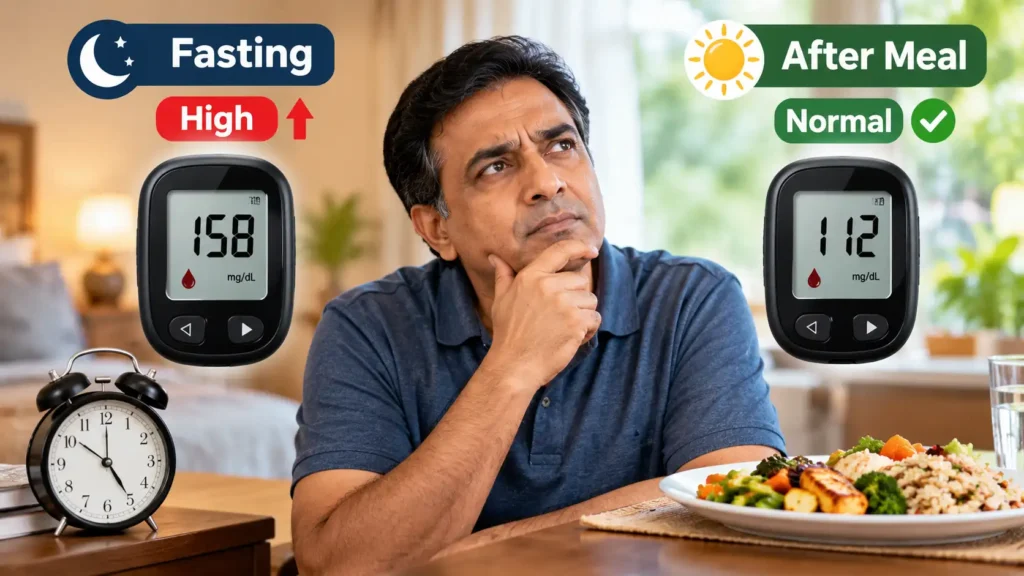
Why Is Fasting Blood Sugar High but After-Meal Sugar Normal?:
Have you ever checked your blood sugar in the morning and found it higher than expected, even though your blood sugar levels after meals are normal? This situation can be confusing, especially for people living with diabetes or prediabetes.
High fasting blood sugar with normal after-meal sugar levels can occur for several reasons, including hormonal changes during the early morning, liver glucose production, medication timing, sleep disturbances, and other lifestyle factors.
Understanding why this happens can help you discuss the right treatment approach with your doctor and improve your overall blood sugar management.
At Dr. Rajender’s Lifestyle Clinic, a structured approach to diabetes care focuses on understanding individual lifestyle patterns, nutrition, physical activity, sleep, and medical factors that influence blood glucose levels.
What Is Fasting Blood Sugar?
Fasting blood sugar is the amount of glucose in your blood after you have not eaten or consumed anything containing calories for at least eight hours.
It is usually measured in the morning before breakfast. This test helps assess how your body regulates glucose when you have not eaten for several hours.
For non-pregnant adults, commonly used fasting blood glucose ranges are:
- Normal: Below 100 mg/dL.
- Prediabetes range: 100–125 mg/dL.
- Diabetes range: 126 mg/dL or higher, usually requiring confirmation with repeat testing or another diagnostic test unless there are clear symptoms and unequivocal hyperglycemia.
These are diagnostic ranges, not personalized treatment targets. Your doctor may recommend different glucose targets depending on your age, health conditions, medications, and diabetes history.
What Is After-Meal Blood Sugar?
After-meal blood sugar refers to the glucose level measured after eating. A post-meal reading is commonly checked about two hours after the beginning of a meal, depending on the testing instructions.
When you eat carbohydrates, your digestive system breaks them down into glucose. Your body releases insulin to help move glucose from the bloodstream into your cells.
In people with diabetes, this process may not work efficiently. However, some individuals can have relatively normal after-meal readings while their fasting glucose remains elevated.
This difference suggests that the factors affecting glucose regulation overnight may be different from those affecting glucose after meals.
7 Reasons Why Fasting Blood Sugar Is High but After-Meal Sugar Is Normal
1. The Dawn Phenomenon
The dawn phenomenon is one possible explanation for high morning blood sugar.
In the early morning, your body releases hormones such as cortisol and growth hormone. These hormones help prepare your body to wake up and become active, but they can also increase glucose production and reduce insulin sensitivity.
As a result, your liver may release more glucose into the bloodstream before you wake up.
For example, a person may have a fasting glucose reading of 145 mg/dL but a two-hour after-meal reading of 125 mg/dL. These numbers are only illustrative, but they show how morning glucose can be higher than a later reading.
If this pattern occurs repeatedly, discuss it with your healthcare professional rather than assuming it is caused by food alone.
2. Increased Glucose Production by the Liver
Your liver stores glucose and releases it when your body needs energy, including during the night.
In people with insulin resistance or type 2 diabetes, the liver may release more glucose than necessary while fasting. This can lead to elevated morning blood sugar even when after-meal readings are within the desired range.
Lifestyle factors such as excess abdominal fat, physical inactivity, and irregular sleep may contribute to insulin resistance.
A healthcare professional can assess whether liver glucose production and insulin resistance may be contributing to your glucose pattern.
3. Eating Dinner Late at Night
The timing and composition of dinner may influence overnight glucose levels in some individuals.
A large dinner, a carbohydrate-heavy meal, or frequent late-night snacking may contribute to elevated glucose readings, particularly when insulin sensitivity is reduced.
However, eating late does not automatically cause high fasting blood sugar in everyone.
Consider these practical habits:
- Eat dinner at a consistent time whenever possible.
- Include vegetables, protein, and appropriate portions of carbohydrate-rich foods.
- Avoid routinely eating large meals immediately before bedtime.
- Monitor how different dinner patterns affect your individual glucose readings.
The goal is not to eliminate carbohydrates but to build a balanced, sustainable eating pattern.
4. Poor Sleep or Irregular Sleep Timing
Sleep plays an important role in glucose regulation.
Insufficient sleep, irregular sleeping hours, and disrupted sleep can affect hormones involved in appetite, stress, and insulin sensitivity. These changes may contribute to higher blood sugar levels.
People who snore heavily or experience daytime sleepiness may also need assessment for sleep apnea, which is associated with insulin resistance.
To support better sleep:
- Maintain a consistent sleep and wake-up schedule.
- Aim for adequate sleep each night.
- Reduce caffeine late in the day if it affects your sleep.
- Discuss persistent snoring or breathing interruptions during sleep with your doctor.
Improving sleep may help glucose management, although it does not replace prescribed diabetes treatment.
5. Stress and Hormonal Changes
Physical and emotional stress can raise blood sugar levels.
When your body experiences stress, it releases hormones such as cortisol and adrenaline. These hormones can signal the liver to release more glucose into the bloodstream.
Work pressure, emotional stress, illness, pain, and disrupted routines may all affect glucose control.
If your fasting readings rise during stressful periods, record your glucose measurements alongside your sleep, activity, and daily routine. This information can help your healthcare professional identify possible patterns.
Stress management strategies such as regular physical activity, relaxation exercises, and maintaining a consistent daily routine may be beneficial.
6. Medication Timing or Treatment Needs
The timing, dose, and duration of diabetes medication can influence glucose levels overnight and in the morning.
For example, a treatment plan may control glucose after meals effectively but may not provide sufficient overnight glucose control. As diabetes progresses, treatment requirements can also change.
Do not increase, decrease, skip, or change the timing of diabetes medication without medical advice. Some medicines can cause hypoglycemia, and an inappropriate adjustment may make glucose control less safe.
If your fasting readings remain high, your doctor may review your medication schedule, glucose records, kidney function, and other relevant health factors before recommending changes.
7. Inconsistent Physical Activity and Insulin Resistance
Regular physical activity helps muscles use glucose and can improve insulin sensitivity.
A sedentary routine may contribute to insulin resistance, making it more difficult for your body to maintain healthy glucose levels overnight.
You do not necessarily need an intense exercise programme to begin improving your activity levels.
Depending on your health and physical ability, helpful habits may include:
- Walking regularly throughout the day.
- Taking a short walk after meals.
- Including strength-training exercises as medically appropriate.
- Reducing prolonged periods of sitting.
People with diabetes-related complications or other medical limitations should discuss suitable activity levels with their healthcare professional.
Is High Fasting Blood Sugar More Dangerous Than High After-Meal Sugar?
Neither reading should be considered in isolation.
Persistently elevated fasting glucose may indicate that your body is struggling to regulate glucose overnight. High after-meal glucose may reflect difficulties managing glucose following food intake.
Both patterns can be important in diabetes assessment and long-term management.
A single reading does not tell the whole story. Your doctor may consider fasting glucose, after-meal readings, HbA1c, medications, symptoms, and other health factors to understand your overall glucose control.
If fasting blood sugar is repeatedly elevated, it is worth investigating even when after-meal readings appear normal.
How Can You Manage High Fasting Blood Sugar?
The most effective approach depends on why your morning glucose is elevated. The following habits can support better glucose management.
Maintain a Balanced Dinner
Build your dinner around non-starchy vegetables, an appropriate portion of protein, and a suitable amount of carbohydrate-rich food. Individual requirements vary, so a personalized meal plan may be helpful.
Keep a Regular Sleep Schedule
Try to maintain consistent sleeping and waking times. Address ongoing sleep problems with a healthcare professional.
Monitor Blood Sugar Consistently
Record your fasting glucose and, when recommended, your after-meal readings. Note meal timing, sleep, physical activity, and medication use to identify recurring patterns.
Stay Physically Active
Regular walking and suitable resistance exercises can support insulin sensitivity and overall metabolic health.
Review Your Diabetes Treatment
If fasting glucose remains above your recommended target, consult your doctor. Medication adjustments may be necessary, but they should be based on your individual circumstances.
Check Your HbA1c
HbA1c provides an estimate of average blood glucose over approximately the previous two to three months. It can help your doctor assess whether your overall diabetes management plan is working.
When Should You Consult a Doctor?
Seek medical advice if your fasting blood sugar remains elevated despite following your treatment plan, your readings change unexpectedly, or you experience symptoms such as increased thirst, frequent urination, unexplained weight loss, or blurred vision.
If your glucose is very high and you experience vomiting, abdominal pain, deep or rapid breathing, confusion, or severe weakness, seek urgent medical care. These symptoms can indicate a serious complication.
Do not delay care simply because your after-meal glucose appears normal.
Frequently Asked Questions
1. Why is my fasting blood sugar high but my after-meal sugar normal?
Possible explanations include the dawn phenomenon, increased glucose production by the liver, insulin resistance, sleep disturbances, stress, and medication-related factors. Repeated readings should be reviewed with your healthcare professional.
2. Can the dawn phenomenon cause high morning blood sugar?
Yes. Hormonal changes in the early morning can increase glucose production and contribute to elevated fasting blood sugar, particularly in people with diabetes.
3. Can a late dinner increase fasting blood sugar?
A large or carbohydrate-heavy late-night meal may contribute to higher morning readings in some people. However, the effect varies according to meal composition, insulin sensitivity, medication, and other factors.
4. Should I stop eating carbohydrates if my fasting sugar is high?
No. Eliminating all carbohydrates is not necessary for everyone and may make your diet difficult to sustain. Appropriate carbohydrate portions, balanced meals, and individualized nutritional guidance are generally more useful.
5. Should I change my diabetes medication if fasting sugar is high?
Do not change your medication on your own. Your doctor can review your glucose records and treatment plan to determine whether an adjustment is appropriate.
6. Can stress and lack of sleep increase fasting glucose?
Yes. Stress hormones and insufficient or disrupted sleep can affect insulin sensitivity and glucose regulation, potentially contributing to higher morning readings.
Conclusion
High fasting blood sugar with normal after-meal sugar is a pattern that deserves attention, particularly when it occurs repeatedly. The dawn phenomenon, liver glucose production, insulin resistance, sleep problems, stress, and medication-related factors may all play a role.
Rather than focusing on one glucose reading, look at your overall pattern and discuss it with your healthcare professional. A combination of appropriate medical care, balanced nutrition, regular activity, and healthy sleep habits can support better glucose management.
Dr. Rajender’s Lifestyle Clinic focuses on evidence-based diabetes care using personalized nutrition, lifestyle modifications, physical activity, and ongoing medical guidance.
If you are experiencing consistently high morning glucose levels, consult a qualified healthcare professional to understand the possible causes and develop a treatment plan suited to your needs.
Book a consultation with Dr. Rajender’s Lifestyle Clinic in Banjara Hills, Hyderabad, to discuss your blood sugar pattern and diabetes management.
Read Also:

One Response