
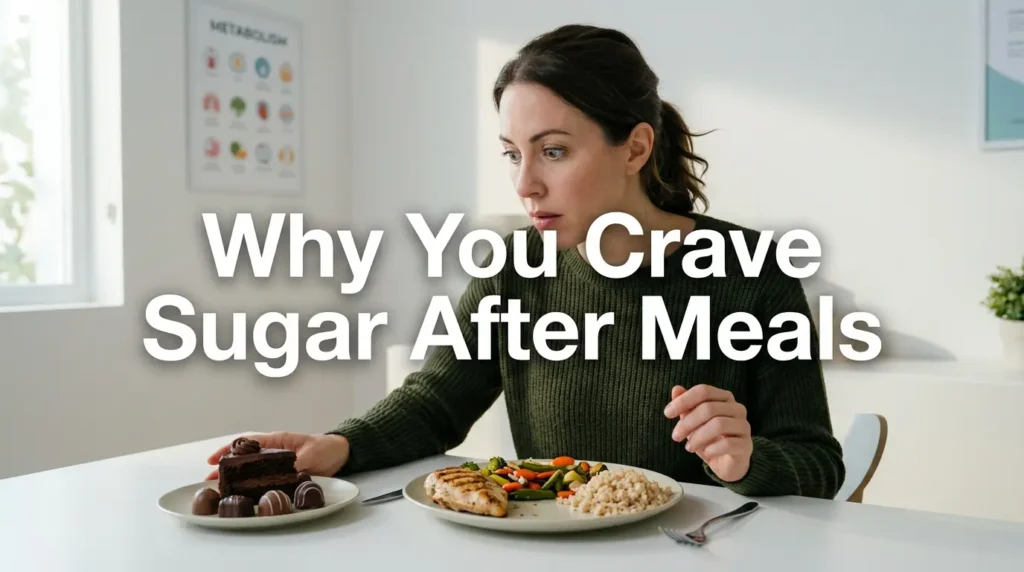
Why You Crave Sugar After Meals: Causes & Solutions
Introduction
Many people experience a strong urge to eat something sweet even after having a full meal. This is often confusing—if you’re full, why does the craving still exist?
The answer lies in how your body regulates blood sugar, hormones, and digestion. Understanding why you crave sugar after meals can help you control these cravings and improve overall health.
Why Do You Crave Sugar After Eating?
1. Blood Sugar Fluctuations
This is the most common reason.
When your meal is high in refined carbohydrates and low in protein or fibre:
- Blood sugar rises quickly
- Then drops suddenly
👉 This drop triggers cravings for quick energy, usually in the form of sugar.

2. Lack of Protein in Meals
Protein helps keep you full and stabilizes blood sugar.
If your meal lacks protein:
- You don’t feel satisfied
- Hunger signals continue
👉 This leads to cravings, especially for sweets.
3. Habit and Psychological Triggers
If you are used to eating dessert after meals:
- Your brain expects sugar as a reward
- It becomes a habit loop
👉 Even if you are full, your brain signals the need for something sweet.
4. Insulin Resistance
In insulin resistance:
- Cells do not absorb glucose effectively
- The body struggles to use energy
👉 The brain interprets this as low energy and triggers sugar cravings.
5. Poor Gut Health
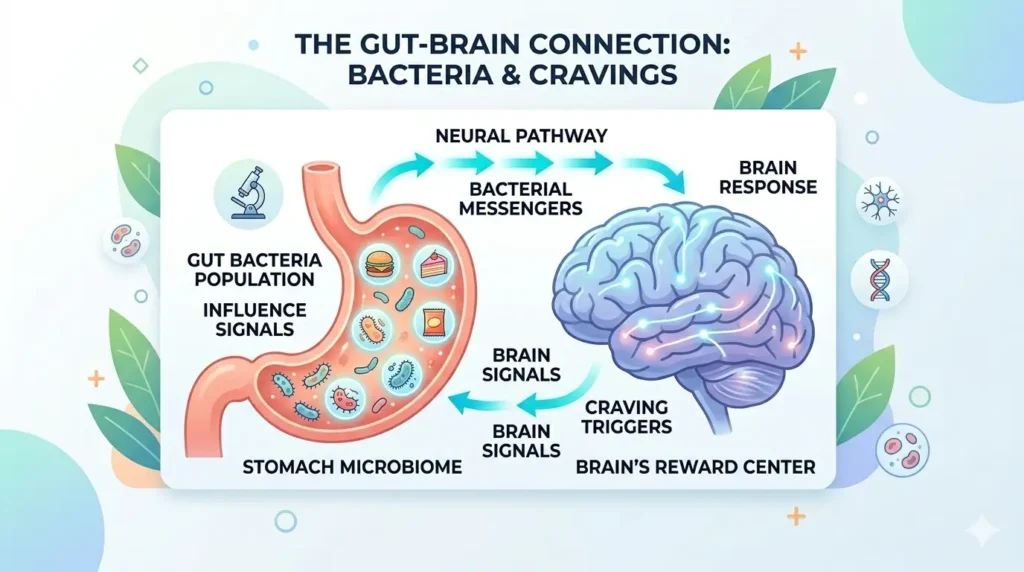
Gut bacteria play a role in cravings.
Unhealthy gut microbes:
- Feed on sugar
- Send signals that increase sugar cravings
👉 This creates a cycle of craving and consumption.
6. Stress and Emotional Eating
Stress increases cortisol levels, which can:
- Increase appetite
- Trigger cravings for sugar and carbs
👉 Emotional eating is a common hidden cause.
How to Stop Sugar Cravings After Meals
1. Eat Balanced Meals
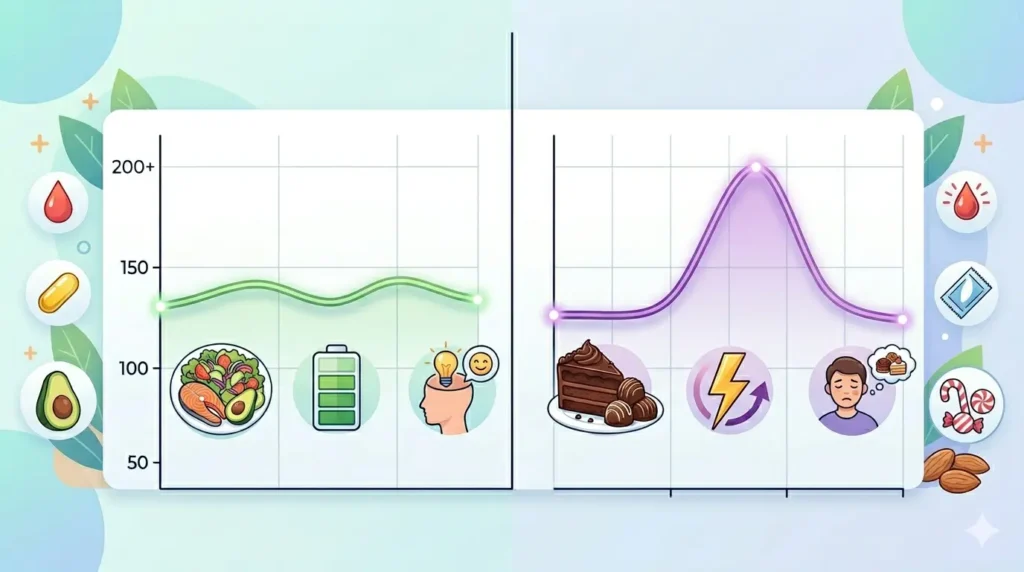
Include:
- Protein (eggs, dal, paneer)
- Fibre (vegetables, whole grains)
- Healthy fats (nuts, seeds)
👉 This keeps blood sugar stable.
2. Avoid Refined Carbohydrates
Limit:
- White rice
- Sugar
- Processed foods
👉 These cause rapid sugar spikes.
3. Improve Gut Health
Include:
- Probiotics (curd, buttermilk)
- Prebiotics (banana, oats)
👉 Supports healthy digestion and reduces cravings.
4. Stay Hydrated
Sometimes thirst is mistaken for hunger.
👉 Drink enough water throughout the day.
5. Manage Stress
Practice:
- Deep breathing
- Meditation
- Physical activity
👉 Helps control emotional cravings.
Conclusion
Craving sugar after meals is not just about willpower. It is often a sign of meal imbalance, blood sugar fluctuations, or underlying metabolic issues.
By making simple changes like eating balanced meals, improving gut health, and managing stress, you can reduce cravings naturally.
👉 Understanding your body is the first step to controlling it.
FAQs
1. Why do I crave sweets after eating?
Due to blood sugar fluctuations, low protein intake, or habit patterns.
2. Is craving sugar a sign of diabetes?
Frequent cravings may be linked to insulin resistance and should be evaluated.
3. How can I stop sugar cravings naturally?
Eat balanced meals with protein, fibre, and healthy fats.
4. Does stress increase sugar cravings?
Yes, stress hormones can trigger cravings for sweets.
5. Can gut health affect cravings?
Yes, unhealthy gut bacteria can increase sugar cravings.