
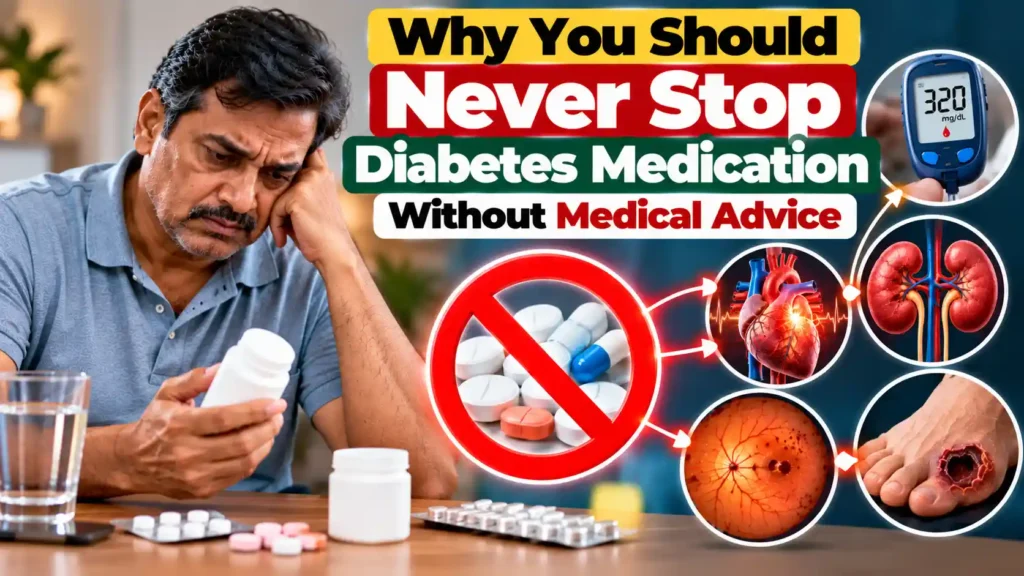
Why You Should Never Stop Diabetes Medication: People living with diabetes may sometimes consider stopping their medication when their blood sugar readings improve, they begin exercising regularly, they change their diet, or they experience side effects. Others may stop treatment because they feel well and believe medication is no longer necessary.
However, normal or improved blood glucose readings do not automatically mean diabetes has disappeared or that prescribed medication can be stopped safely.
Diabetes is a condition that often requires ongoing monitoring and an individualised treatment plan. Some people may need medication adjustments over time, while others continue to require treatment to maintain safe glucose levels and reduce the risk of complications.
Understanding why diabetes medication should not be stopped without medical advice can help people make safer decisions about their health.
Why Is Diabetes Medication Important?
Diabetes medications are prescribed according to a person’s blood glucose levels, diabetes type, medical history, kidney function, cardiovascular risk, and other individual factors.
Different medicines perform different functions.
- Metformin helps reduce glucose production by the liver and improves insulin sensitivity.
- Insulin helps the body use glucose and is essential for people with Type 1 diabetes.
- SGLT2 inhibitors help the kidneys remove glucose through urine and may provide additional heart or kidney benefits for selected patients.
- GLP-1 receptor agonists can help regulate blood glucose and may support weight management, with benefits depending on the specific medicine and patient.
- Other medications may stimulate insulin release or act through different mechanisms.
Stopping a medicine can remove some or all of its intended benefits. The consequences depend on the medicine and the person’s health status.
What Can Happen If You Stop Diabetes Medication Suddenly?
1. Blood glucose may increase
Without the prescribed treatment, glucose may rise above the target range. This can happen even if you do not immediately notice symptoms.
Persistent high blood glucose may contribute to damage involving the eyes, kidneys, nerves, heart, and blood vessels over time.
2. You may develop symptoms of high blood sugar
Possible symptoms include:
- Increased thirst.
- Frequent urination.
- Fatigue or weakness.
- Blurred vision.
- Unintended weight loss.
- Increased hunger.
These symptoms can develop gradually or more quickly, depending on the cause and severity of the glucose elevation.
3. People who need insulin may face serious risks
People with Type 1 diabetes need insulin for survival. Stopping insulin can lead to diabetic ketoacidosis (DKA), a potentially life-threatening emergency.
DKA can also occur in some people with Type 2 diabetes, particularly in certain circumstances, including during treatment with SGLT2 inhibitors.
Warning signs can include nausea, vomiting, abdominal pain, deep or rapid breathing, fruity-smelling breath, and confusion. Seek emergency medical care if DKA is suspected. Do not wait for every symptom to appear.
4. You may lose additional health benefits
Some diabetes medicines are prescribed not only to lower glucose but also to reduce the risk of heart failure, cardiovascular events, or worsening kidney disease in appropriate patients.
Stopping these medicines without discussing the reasons with your clinician may remove benefits beyond blood sugar control.
5. It may become harder to assess your treatment plan
If medication is stopped without a plan, changes in blood glucose can make it difficult to determine whether improvements or worsening are related to diet, activity, illness, or the medication change.
A supervised adjustment makes it easier to monitor the effect safely.
What If Your Blood Sugar Is Normal?
Improved readings are encouraging, but they need to be interpreted in context.
Blood glucose may improve because medication is working, meals have changed, physical activity has increased, weight has changed, or an illness has resolved.
Your doctor may review fasting glucose, after-meal readings, HbA1c, side effects, and other health factors before considering a change.
Some people with Type 2 diabetes can achieve remission under defined criteria, but remission is not the same as a permanent cure. Blood glucose can rise again, and ongoing monitoring remains important.
Never stop insulin or other prescribed medication solely because a few readings are normal.
What Should You Do If You Experience Side Effects?
Do not ignore side effects, but do not stop medication without discussing the safest next step.
Tell your healthcare professional:
- What symptoms you are experiencing.
- When the symptoms began.
- The medicine and dose involved.
- Whether the symptoms occur after taking the medicine or around meals.
- Any recent changes in your blood glucose readings.
Your clinician may consider changing the dose, adjusting the timing, switching medicines, or investigating another cause.
If you experience a severe allergic reaction, severe hypoglycaemia, or another serious reaction, seek urgent medical help.
How Can You Discuss Medication Reduction Safely?
If your goal is to reduce the number of medicines you take, prepare for a structured review.
Track your blood glucose
Bring your glucose readings or continuous glucose monitoring reports to your appointment.
Review your lifestyle changes
Discuss changes in eating habits, activity levels, weight, sleep, and alcohol intake.
Review your current prescriptions
Include all medicines and supplements so your clinician can check for interactions and side effects.
Ask about monitoring after a change
If a medication adjustment is appropriate, ask when to check glucose, when to repeat tests, and which symptoms require medical attention.
Frequently Asked Questions
1. Can I stop diabetes medication if my blood sugar becomes normal?
Not without discussing it with your doctor. Normal readings may reflect the effect of your current treatment.
2. Is it dangerous to stop insulin suddenly?
Yes, particularly for people with Type 1 diabetes. Stopping insulin can lead to diabetic ketoacidosis, a life-threatening emergency.
3. Can lifestyle changes reduce the need for diabetes medication?
For some people, lifestyle changes can improve blood glucose and may allow a clinician to reduce medication. Changes must be supervised and monitored.
4. What if diabetes medication causes side effects?
Contact your healthcare professional. They can assess the symptoms and consider safer alternatives or adjustments.
5. Does taking diabetes medication mean my diabetes is getting worse?
No. Medication may be needed for many reasons, including maintaining glucose control and reducing cardiovascular or kidney risks. The need for treatment is not a personal failure.
6. Can Type 2 diabetes go into remission?
Some people achieve remission, often following substantial and sustained improvements in weight and metabolic health. However, remission does not guarantee that diabetes will never return, so regular monitoring remains necessary.
Conclusion
Stopping diabetes medication without medical advice can lead to high blood glucose, loss of important health benefits, and potentially serious complications. Even when your readings improve, medication changes should be based on your overall health, test results, and treatment goals.
With appropriate medical supervision, nutrition changes, physical activity, and regular follow-up, your diabetes treatment plan can be reviewed and adjusted when needed.
Looking for individualised diabetes guidance?
Dr. Rajender’s Lifestyle Clinic in Banjara Hills, Hyderabad, supports diabetes management through medical guidance, personalised nutrition, and sustainable lifestyle changes. Arrange a consultation to discuss your current medication, blood glucose readings, and long-term health goals.
Read Also:

One Response